
In the world of construction and land development, what you can’t see is often more important than what you can. Before a single brick is laid or a foundation is poured, the ground beneath your feet holds the secrets to the longevity, safety, and cost-effectiveness of your project.
At Essel, we believe that thorough site investigation isn’t just a regulatory hurdle—it’s a risk management powerhouse. To help you navigate this process, we’ve broken down the essential components of a comprehensive soil checklist.
1. The Power of Preliminary Planning
Every successful site investigation starts in the archives. Before moving heavy machinery onto the site, it is vital to conduct a thorough desktop study.
- Historical Data: What was this land used for previously? (Agricultural, industrial, residential?)
- Geological Mapping: Understanding the regional soil types provides a roadmap for what to expect during physical testing.
2. Physical Site Characterization
Once you are on the ground, the focus shifts to the physical properties of the soil. This phase is about identifying the “layers of the story.”
- Soil Stratigraphy: We identify the different layers of soil and rock to determine depth and consistency.
- Groundwater Levels: Water is the enemy of stability. Identifying the water table is crucial for drainage planning and foundation design.
3. Field Testing & Sampling
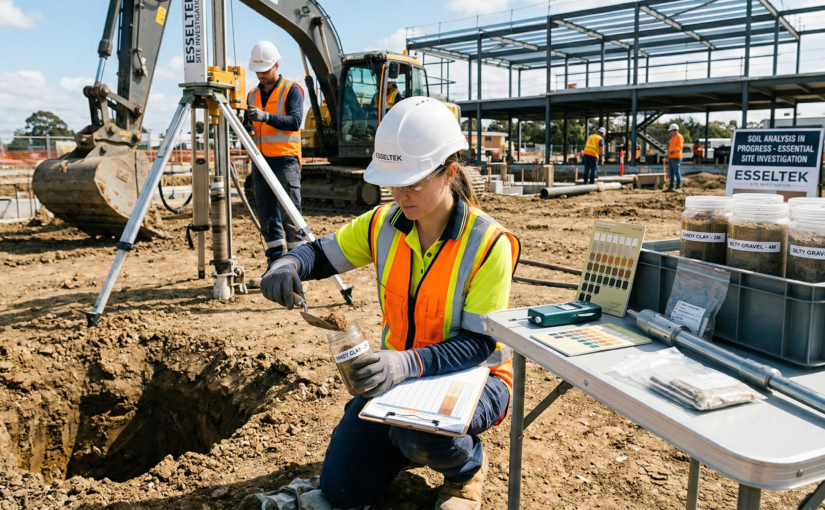
This is where the data gets technical. Using a variety of methods, we extract the information needed for engineering calculations.
- Standard Penetration Testing (SPT): This measures the density and consistency of the soil.
- Boreholes and Test Pits: These allow for visual inspection and the collection of “undisturbed” samples for laboratory analysis.
4. Laboratory Analysis: Under the Microscope
The samples collected in the field are sent to a certified lab to determine their chemical and physical “DNA.”
- Classification: Is it clay, silt, sand, or gravel? Each reacts differently to weight and moisture.
- Contamination Screening: Especially important for urban or brownfield sites, we check for heavy metals, hydrocarbons, or other hazardous materials that could impact safety or disposal costs.
- Load-Bearing Capacity: We calculate exactly how much weight the soil can support without shifting or settling.
5. Final Reporting and Recommendations
The checklist concludes with a comprehensive Geotechnical Report. This document translates raw data into actionable advice for your architects and structural engineers. It answers the big questions:
- What type of foundation is required?
- Is the soil at risk of liquefaction?
- Are there any environmental remediation steps needed?
Why This Matters for Your Bottom Line
Skipping or rushing through this checklist is one of the most common causes of project delays and budget overruns. Unforeseen soil conditions can lead to:
- Foundation failure and structural cracking.
- Unexpected remediation costs for contaminated soil.
- Legal and environmental compliance issues.
Download Our Full Checklist Want to ensure your next project is built on a solid foundation? Click here to view our detailed Essel Soil Checklist and see how our team of experts ensures site safety and success from the ground up.
Ready to start your site investigation? Contact Essel today for a consultation.