
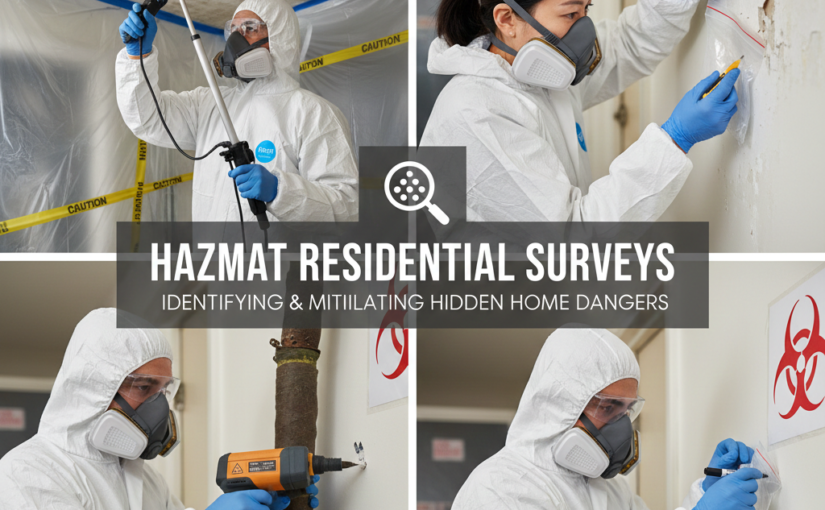
Hazardous materials (Hazmat) in construction are substances that can cause harm to humans, animals, or the environment due to their chemical, physical, or biological properties. In the context of residential buildings, these are often “legacy materials”—things that were considered “miracle products” decades ago but are now known to be toxic.
1. Common Hazmat Materials & Their Locations
If you are living in or renovating a home built before the late 1990s, there is a high probability some of these materials are present.
- Asbestos: Found in popcorn ceilings, floor tiles, pipe insulation, and roofing shingles.
- Lead: Primarily found in paint used before 1978, but also in older plumbing pipes and solder.
- Silica Dust: Created when cutting, grinding, or drilling concrete, stone, brick, and mortar.
- PCBs (Polychlorinated Biphenyls): Found in old fluorescent light ballasts and some caulking compounds.
- Mold: While biological, it is treated as a hazard; it thrives in damp drywall, insulation, and wood.
- VOCs (Volatile Organic Compounds): Emitted as gases from certain paints, adhesives, and manufactured wood products (like MDF).
2. Health Threats to Residents
The danger usually arises when these materials are disturbed. Once they become airborne (friable), they can be inhaled or ingested.
Respiratory Issues
- Asbestos: Long-term exposure can lead to Asbestosis (scarring of the lungs) or Mesothelioma (a fatal cancer of the lung lining).
- Silica: Causes Silicosis, an incurable lung disease that makes breathing increasingly difficult.
Neurological & Developmental Damage
- Lead: This is a potent neurotoxin. In children, even low levels of lead exposure can cause permanent brain damage, behavioral issues, and lower IQ. In adults, it can cause kidney damage and reproductive issues.+1
Toxicity & Carcinogens
- PCBs: These are “forever chemicals” linked to various cancers and immune system suppression.
- Mold: Causes chronic allergic reactions, asthma flare-ups, and in some cases, fungal infections in the lungs.
3. How to Safely Manage Hazmat
You should never attempt to “DIY” the removal of these materials if you suspect they are present. Here is the standard professional approach:
- Testing & Inspection: Hire a certified environmental consultant (not the removal contractor, to avoid a conflict of interest) to test samples. We have 20+ years of experience and certified personal to conduct hazmat surveys.
- Containment: We use “negative air pressure” and plastic sheeting to ensure dust doesn’t travel to other parts of the house.
- PPE (Personal Protective Equipment): Workers wear respirators (N95 or P100), Tyvek suits, and gloves.
- Wet Methods: Keeping materials wet while cutting or removing them prevents toxic dust from flying into the air.
- Proper Disposal: Hazmat cannot go in your regular trash. It must be double-bagged and taken to a designated hazardous waste facility.